Backend systems & client builds

Systems and shipped work.

Backend systems selected for evidence of depth, followed by product and client builds shown through real screenshots and the manuals delivered with them.

PUBLIC + PRIVATE + CLIENT WORK2023—2026
01 / flagship backend

BeanLoyal API

A Spring Boot service for a multi-role coffee loyalty network where points must remain correct across earn, redeem, cancel, and administrative flows.

Open repository
  • Java 21
  • Spring Boot 3.5
  • Firebase Admin
  • Bucket4j
  • Micrometer
  • Docker
Public repository · packaged with a Render service blueprint

System brief

The backend supports customers, cashiers, and administrators without collapsing their permissions into one controller. Loyalty commands pass through authentication, rate policy, idempotency checks, and service rules before state changes are accepted.

Key engineering decisions

  • Safe retriesIdempotency handling protects transaction-style commands from repeated client requests.
  • Abuse boundaryBucket4j token buckets apply per-IP and per-user policies, with explicit cleanup for inactive local buckets.
  • Bounded workAn expired-redemption job processes a fixed batch every five minutes instead of attempting an unbounded sweep.
  • VisibilitySpring Actuator, Micrometer, and Prometheus expose health and runtime metrics; request logging and audits provide operational context.
command lifecycleBEAN / API
Auth filterFirebase identity
Policy layerlimit + idempotency
Domain serviceloyalty rules
ADMIN / ANALYTICS
AUDIT / ACTIVITY
JOBS / EXPIRY
02 / deployed architecture

Im Étoile POS

A retail point-of-sale application designed around one server-side database contract that travels cleanly between local Docker and cloud runtimes.

Private client repository · implementation inspected
  • TypeScript
  • TanStack Start
  • Neon
  • Docker Compose
  • Vercel
  • Render
Private build · repository details intentionally limited

System brief

The application keeps its PostgreSQL connection server-only, scopes runtime behavior with a store identifier, and uses Neon as the shared source of truth. The same application build can run behind Vercel’s serverless runtime or as a Docker service on Render.

Key engineering decisions

  • Secret boundaryThe database URL is never exposed through browser-prefixed environment variables.
  • Portable runtimeA production Dockerfile and Compose definition match the cloud service contract instead of creating a separate local architecture.
  • Preview isolationDeployment notes explicitly call for separate Neon branches and store identifiers when preview environments must not share production data.
  • Platform healthThe Render blueprint defines a service health check and injects secrets at deploy time.
portable runtimePOS / CLOUD
Browsersales workflow
Server routesdatabase boundary
Neonshared Postgres
LOCAL / COMPOSE
CLOUD / VERCEL
SERVICE / RENDER
03 / safety engine

SafeBite

A team-built Android system that turns barcode and ingredient data into an explainable safety verdict for food, cosmetics, and medication.

Open repository
  • Java
  • Android
  • Retrofit
  • ML Kit
  • Firebase Auth
  • Firestore
Public team repository · EMSI Tech Hackathon project

System brief

SafeBite scans products, queries specialized food, cosmetics, and medication sources, then maps the strongest available result into one shared model. A verdict service normalizes ingredient text, expands allergy aliases, and returns Safe, Warning, Danger, or Unknown with concrete reasons.

Key engineering decisions

  • Parallel lookupThe scan orchestrator queries classification and detail sources concurrently, applies an eight-second bound, and selects medication, cosmetics, or food results by explicit priority.
  • Graceful fallbackComposite clients and category-aware fallback paths keep one unavailable provider from collapsing the complete scan flow.
  • Explainable verdictNormalized ingredient data is compared against saved allergy aliases and cosmetics watchlists; the result includes matched reasons rather than a black-box score.
  • Local protectionAuthentication uses Firebase, profiles and history use Firestore, and sensitive preferences are stored through Android security crypto.
safety verdict pathSAFE / BITE
Camera + ML Kitbarcode and OCR
Scan orchestratorparallel providers
Verdict serviceallergy rules
FOOD / COSMETICS
MEDICATION / FALLBACK
REASONS / VERDICT
04 / learning platform

EduLife

A mobile-first education platform with one backend source of truth for courses, enrollments, progress, exams, analytics, and certificates.

Open repository
  • Java 21
  • Spring Boot 3.5
  • PostgreSQL
  • Flyway
  • Android
  • React
  • Docker
Public repository · active full-stack MVP development

System brief

EduLife coordinates an Android app, a React web client, and a Spring Boot modular monolith. The backend owns permissions and the complete learner loop: discover, enroll, learn, take a server-scored exam, and receive a verifiable PDF certificate.

Key engineering decisions

  • Pragmatic monolithDomain modules preserve clear ownership without introducing distributed-system overhead before the MVP requires it.
  • Server authorityFirebase identifies the client, while the backend validates tokens, resolves internal users, enforces roles, and protects exam integrity.
  • Database evolutionPostgreSQL and Flyway keep the learning model and schema changes explicit across courses, progress, attempts, analytics, and certificates.
  • Container safetyThe multi-stage Java 21 image runs as a non-root user and applies container-aware memory limits for the deployed service.
platform topologyEDU / LIFE
Android + Reactlearner clients
Spring modulesrules + security
PostgreSQLplatform truth
FIREBASE / IDENTITY
FLYWAY / SCHEMA
PDF / CERTIFICATES
05 / cloud systems lab

PulseStream

An evolving event-processing platform used to study the mechanics of telemetry ingestion, decoupled processing, observability, and resilient local infrastructure.

Private architecture lab · in progress
  • Kafka
  • PostgreSQL
  • Redis
  • Prometheus
  • Grafana
  • Docker
  • Kubernetes design
Architecture and local platform implemented · service roadmap in progress

System brief

Telemetry enters through an ingestion boundary, crosses Kafka, and fans out to processing and anomaly-detection consumers. PostgreSQL holds durable results, Redis supports fast access, and a dead-letter path is part of the resilience model.

Key engineering decisions

  • DecouplingKafka separates ingestion pressure from independent telemetry and anomaly consumers.
  • Local parityCompose provisions Kafka, Zookeeper, PostgreSQL, Redis, Prometheus, Grafana, and dedicated exporters with health checks and persistent volumes.
  • Design recordArchitecture decisions document technology choices and the sequence from local Compose to later Kubernetes deployment.
  • Honest scopeThe platform is presented as an active systems lab, not as a finished production service.
stream topologyPULSE / LAB
Ingestiontelemetry events
Kafkatopics + DLQ
Consumersprocess + detect
POSTGRES / DURABLE
REDIS / FAST PATH
GRAFANA / OBSERVE
06 / retail POS

OpticPOS

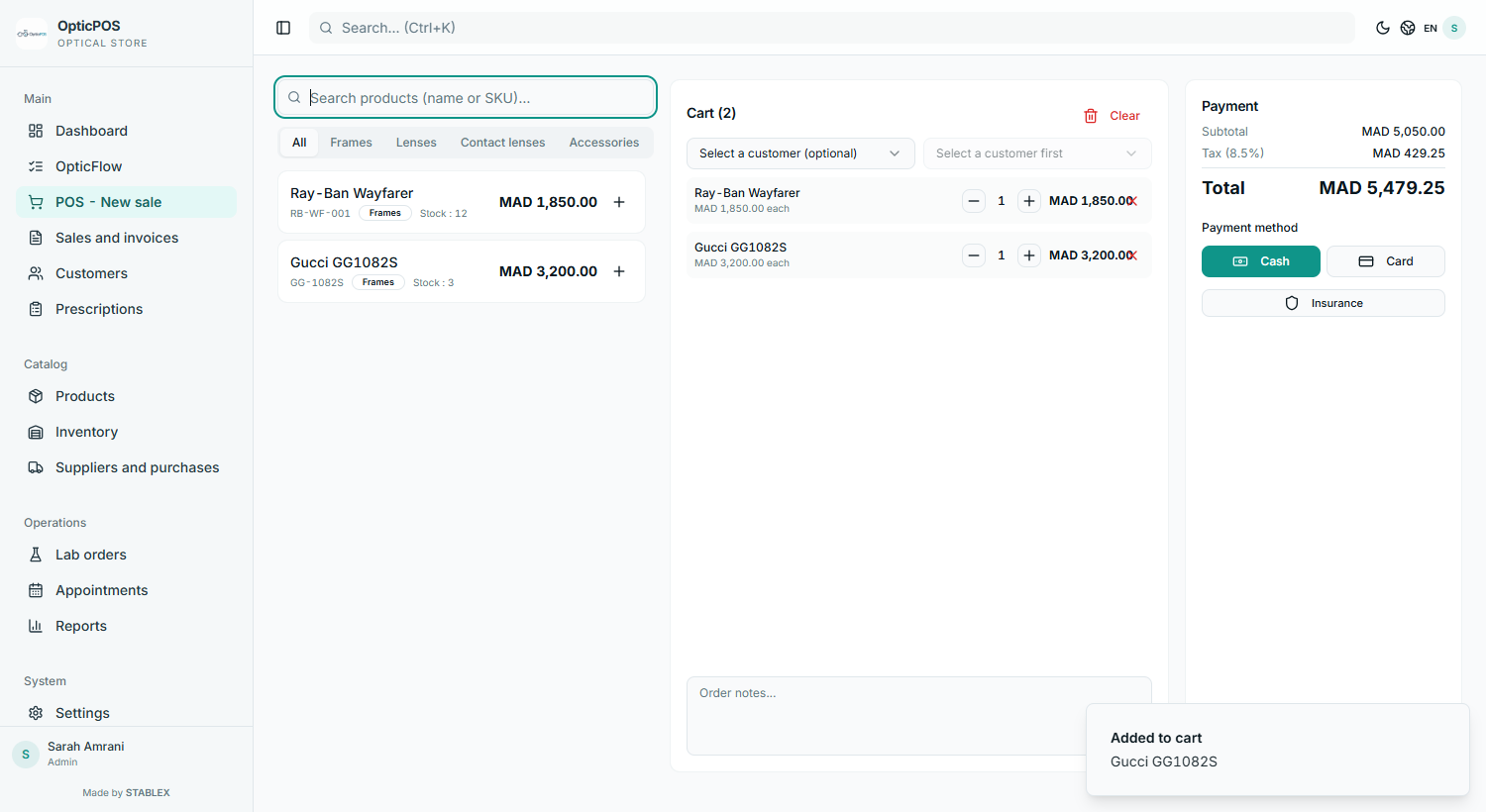
A React point-of-sale and operations app for optical stores: checkout, prescriptions, lab orders, inventory, appointments, and reports, in French with MAD pricing.

Client build · not publicly hosted
  • React
  • SQLite
  • Radix UI
OpticPOS checkout screen with frame catalog, cart, and payment total for an optical store
07 / SaaS dashboard

AtlasRent

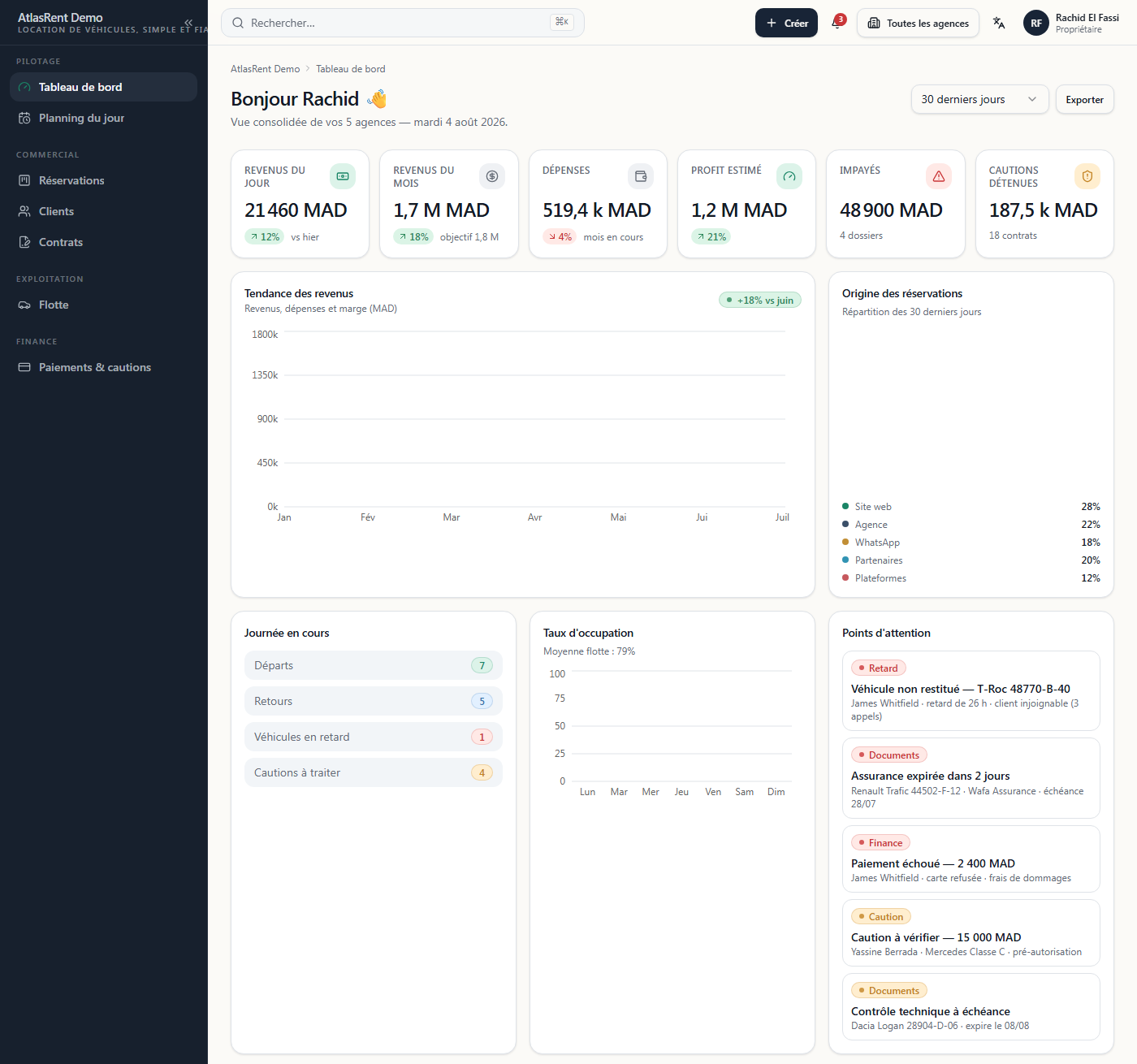
A Moroccan car-rental management SaaS prototype: revenue, expenses, fleet occupancy, and per-vehicle profitability behind an owner login, on top of a public booking site.

Frontend prototype · not publicly hosted
  • React
  • TanStack
  • RTL/i18n
AtlasRent owner dashboard showing daily and monthly revenue, expenses, unpaid balances, and reservation origin
08 / marketing site

Bean Loyal

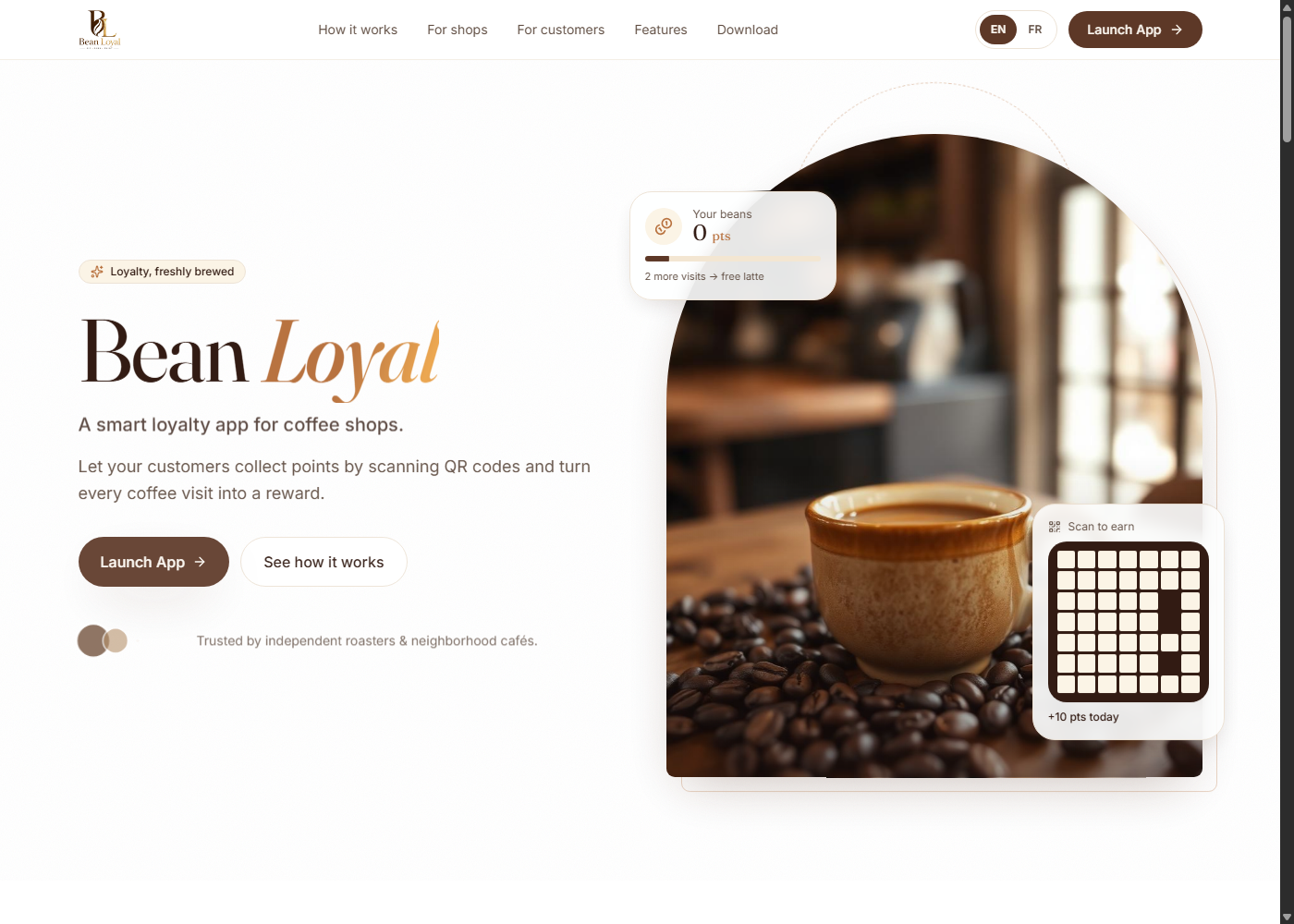
The public landing page for the BeanLoyal coffee-shop loyalty app: how the points system works, for shop owners and for customers, with a QR scan-to-earn flow.

Landing page · not publicly hosted
  • TanStack Start
  • TypeScript
Bean Loyal landing page hero showing the points card and QR scan-to-earn widget
09 / smaller systems

Useful tools count too.

Not every project needs microservices. Morocco Tech Radar is a focused Python automation that runs on a daily GitHub Actions schedule, filters noisy search results, remembers seen links, and sends high-signal events to Telegram.

10 / discuss a system

Need backend thinking?

Available for internships, junior roles, and selected freelance workCasablanca · Remote